
OUR COMPLETE
Solidification Control Programme
Foundry experts know from sometimes painful experience the great importance of solidification rate. The solidification rate not only influences the demand for feeding metal in the relevant casting section, but also the structure and, in the case of cast iron materials, also graphite formation. With regard to feeding, it generally holds that as the crystallisation rate increases, the negative shrinkage pressure increases, and thus the demand for feeding metal also increases. Conversely, a decreasing growth rate leads to an increase in porosity. However, attention must be paid to the differing feeding sensitivity of the respective alloy under consideration.
It is not always possible, particularly in the case of complex casting designs, to achieve the condition of directional solidification simply by placing feeders. For this reason, the use of chill plates, or even the casting-in of chills for Solidification Control, has long been part of the state of the art in foundry technology.
Through this targeted heat extraction, the following aims are pursued:
- Creating artificial end zones
- Cooling down nodes, thickened sections or other accumulations of material to a
- modulus-appropriate dimension
- Suppressing or shifting segregation zones
- Avoiding cracks
It is precisely for these areas of application that we have aligned our product range, and we can offer you a comprehensive Solidification Control programme. For further details, please refer to the product catalogue.
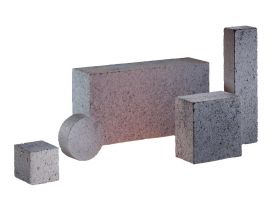
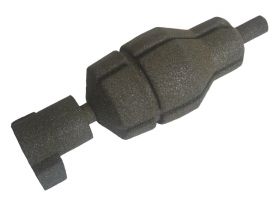
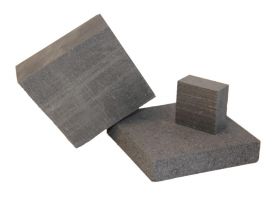
Systems and Cooling Media for Targeted Solidification Control
further terms
Solidification Control, directional solidification, solidification, cooling, cooling media, chill plates, chills, SiC Cooling Plates, ceramic cooling plates, ceramic SiC Cooling Plates, chill blocks, Graphite Moulds, graphite plates, graphite blocks, cooling compound, SiC Cooling Compound, ceramic SiC Cooling Compound, cooling sand
Key Benefits
- Targeted heat extraction
- Easy to use
- High quality
Like what you see?
Help others and share our page.
Share via LinkedIn